Youth hostels, airport lounges, shared apartments in unfamiliar cities - these are the quiet starting points of a deeper journey. Behind every young traveler adjusting to a new time zone is a story of quiet transformation. It’s not just about seeing new places, but about being reshaped by them. One such path begins with a message, a video call, and a suitcase heading toward a host family thousands of miles away. This isn’t tourism. It’s cultural exchange: an experience where daily life becomes the classroom, and every meal, miscommunication, or shared laugh builds resilience. The real journey starts not when the plane lands, but when the comfort zone ends.
The core advantages of immersing in a new culture
Stepping into a foreign household or community challenges assumptions in ways textbooks never can. Daily interactions - from navigating mealtimes to resolving misunderstandings - become exercises in adaptability. Cross-cultural empathy doesn’t come from theory; it grows through shared routines, small kindnesses, and the quiet moments of connection that follow confusion. Participants often report a stronger sense of self-confidence, not because they’ve mastered everything, but because they’ve learned to navigate uncertainty.
- Increased emotional resilience through real-life problem solving
- Reduced unconscious bias by engaging with cultural differences firsthand
- Stronger interpersonal skills developed through constant active listening
- Greater openness to ambiguity and unfamiliar social cues
Establishing a secure framework for this journey is essential, which is why working with a dedicated au pair agency helps ensure a successful match for both parties. These agencies don’t just connect people - they guide them through the emotional nuances of living together across cultural lines, ensuring both the host family and the participant feel supported.
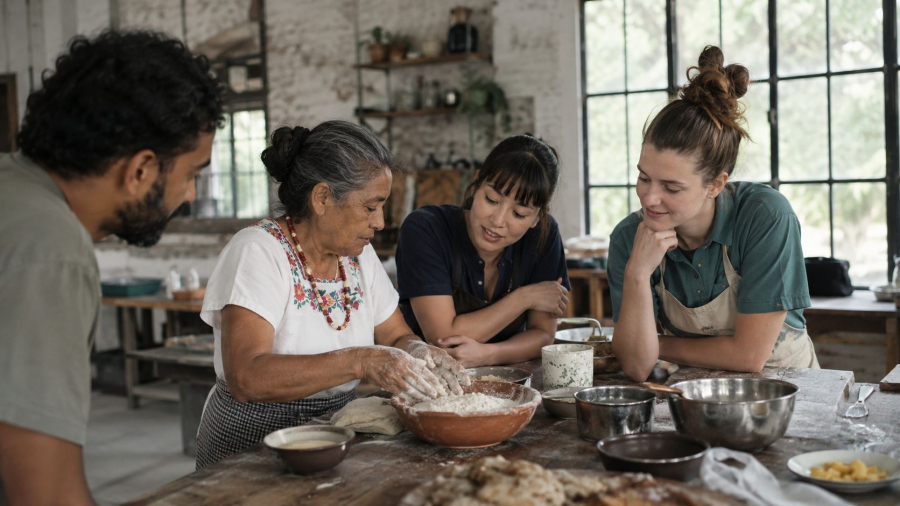
Fostering personal growth through real-world challenges
Building emotional intelligence and soft skills
When language isn’t automatic, every conversation demands focus. You listen more closely. You pause before reacting. Misunderstandings don’t escalate - they become opportunities to clarify. This constant calibration strengthens emotional intelligence. The ability to read a room, to sense tone, to adjust your expression - these aren’t just survival tactics abroad. They’re transferable soft skills that employers increasingly value.
In professional settings, these traits translate into better teamwork, leadership, and conflict resolution. The person who learned to explain their needs in broken French or interpret unspoken household rules often becomes the colleague who navigates office dynamics with more nuance. It’s not about charisma - it’s about having practiced empathy under pressure.
Developing a sense of global citizenship
Living in another country reshapes how you see global issues. News about inflation, education, or healthcare isn’t abstract - it’s what your host family discusses at dinner. Climate policies? You’ve seen how rising temperatures affect local farming. This lived experience fosters a deeper sense of global citizenship. You’re no longer just informed - you’re connected.
That connection stays with you. Long after the exchange ends, you view world events through a more human lens. You don’t just sympathize - you understand, because you’ve lived alongside people for whom these issues are personal. It’s a quiet but powerful shift: from observer to participant in a global community.
Language immersion vs. traditional learning
The speed of linguistic progress
Classroom language learning has structure, but immersion has urgency. When your host child asks for help with homework, or you need to explain a minor injury to a pharmacist, there’s no pause button. That pressure - not stress, but purpose - accelerates fluency. You don’t just learn vocabulary; you internalize rhythm, tone, and context.
Studies and anecdotal evidence alike suggest that immersion learners often progress faster in conversational fluency than their classroom-only peers. It’s not magic - it’s repetition with meaning. Each interaction reinforces the last, building confidence and competence simultaneously.
Comparing exchange formats for different goals
Not all cultural exchanges serve the same purpose. Some are designed for language acquisition, others for professional development or family support. Duration varies - from semester-long academic programs to year-long au pair arrangements. The right fit depends on goals, age, and lifestyle.
| Learning Method | Conversational Fluency | Cultural Nuance | Cost-Effectiveness |
|---|---|---|---|
| Traditional Language Courses | Gradual, structured | Limited exposure | Moderate (tuition, materials) |
| Cultural Exchange Immersion | Rapid, practical | Deep, daily exposure | High (room and board covered) |
Long-term impact on career and social relationships
Expanding professional networks internationally
Most participants return home with more than memories - they return with connections. A host sibling might become a business partner. A local teacher might refer you to a job abroad. These relationships form a global network that’s organic, not transactional. In a world where remote work and international collaboration are growing, these ties can open doors that traditional networking can’t.
Global mobility isn’t just about job hunting overseas - it’s about having a firsthand understanding of how teams operate across time zones and cultures. Employers in multinational companies often look for this blend of experience and adaptability. It’s not just a line on a CV; it’s proof of resilience and cultural agility.
Breaking down stereotypes through direct contact
Prejudices are built on distance. The moment you share a kitchen, a holiday, or a difficult conversation with someone from a different background, generalizations start to dissolve. You don’t just learn about a culture - you learn about a person. And from there, you start to see past the label.
This is where cultural exchange does its quiet but vital work. It replaces fear with familiarity. It turns “they” into “she” or “he.” That shift doesn’t just change one person - it can ripple through families, schools, and workplaces when the traveler returns home.
The ripple effect on the home community
Returning travelers often become informal ambassadors. They bring back new perspectives on education, food, parenting, and social norms. A teenager who lived in France might introduce their hometown to the concept of long, mindful meals. An au pair from Colombia might share sustainable practices observed in their host community.
These small shifts matter. They challenge assumptions and broaden horizons locally. Friends and family begin to see other cultures not as distant concepts, but as lived experiences shared by someone they trust. In this way, the benefits of cultural exchange extend far beyond the individual - they become a quiet force for greater openness at home.
Commonly asked questions
How does biometric data and digital tracking impact modern exchange security?
Modern agencies often use verified ID checks and secure communication platforms to protect participants. While biometric data isn't standard, background checks and digital identity verification help ensure safe, trustworthy matches for host families and travelers.
Can I pursue a cultural exchange if I am significantly older than the typical student age?
Yes. While many programs target young adults, some agencies offer senior or professional exchange options. These programs value life experience and often focus on mutual learning rather than age-specific activities.
Is the rise of virtual reality exchange sessions decreasing the value of physical travel?
Virtual tools can prepare travelers, but they don’t replace lived experience. Real cultural exchange involves unpredictability, sensory immersion, and emotional bonds - elements that VR can’t fully replicate.
